
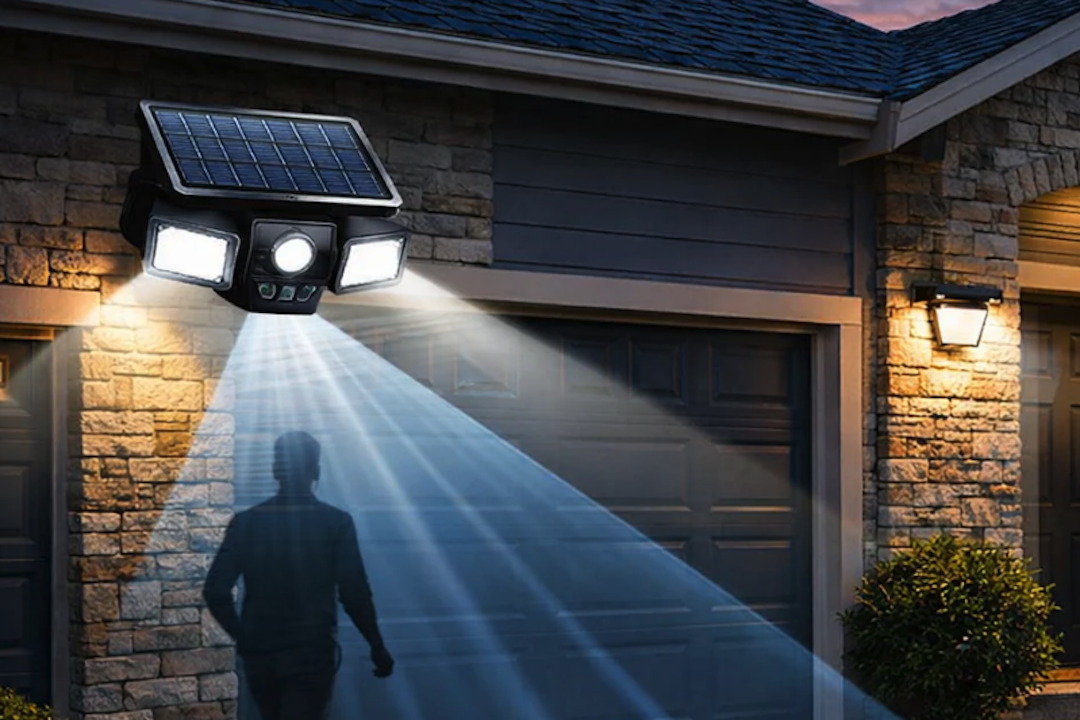

Thinking about boosting your outdoor security without running new wires or racking up electricity bills? Solar motion sensor lights are a solid option. They’re self-sufficient, reacting to movement to illuminate specific areas, which can deter unwanted visitors and make your property safer for you and your family.
Let’s break down why solar lights Lovefanli are often a smart choice for outdoor security, especially when compared to their wired counterparts.
Energy Independence and Cost Savings
The big draw here is that solar lights run entirely on sunlight. No need to tap into your home’s electrical grid. This means:
- Zero electricity bills: Once installed, they don’t add to your monthly power costs. Over time, this really adds up.
- Eco-friendly: Using renewable energy reduces your carbon footprint, which is a nice bonus if you’re trying to be more environmentally conscious.
- Off-grid functionality: They work even during power outages, providing a reliable light source when traditional lights might fail. This can be particularly reassuring in stormy weather or during blackouts.
Simplified Installation
Wired outdoor lights can be a real headache to install. You often need an electrician to run new conduit, drill holes, and connect wires, which adds to the cost and complexity. Solar lights, on the other hand, are generally much simpler:
- No wiring required: This is the game-changer. You just mount them where you need them.
- DIY friendly: Most solar lights can be installed with basic tools – a screwdriver or drill. This saves you money on professional installation services.
- Flexibility in placement: Since they don’t need to be near an electrical outlet, you can place them virtually anywhere the sun shines, such as fences, sheds, garages, or even remote areas of your yard.
Deterring Unwanted Visitors
The primary security benefit of motion sensor lights, whether solar or wired, is their ability to surprise and deter.
- Sudden illumination: Criminals prefer to operate under the cover of darkness. A sudden burst of light can startle them, making them feel exposed and vulnerable. This often encourages them to move on to an easier target.
- Visibility for surveillance cameras: If you have outdoor security cameras, a motion-activated light can significantly improve the quality of nighttime footage, making it easier to identify individuals or vehicles.
- Alerting occupants: A sudden flash of light can also alert you or your neighbors to potential activity outside, prompting a quick check.
Enhancing Safety and Convenience
Beyond security, these lights offer practical benefits for everyday life.
- Navigational lighting: No more fumbling for your keys or tripping on uneven paths when you arrive home after dark. The light automatically illuminates your way.
- Pet safety: Letting your pet out at night becomes less of a guessing game when you can clearly see what they’re up to in the yard.
- Access to outdoor areas: Need to grab something from the shed or take out the trash after dark? Motion sensor lights make these tasks much safer and more convenient.
Choosing the Right Solar Motion Sensor Light
With so many options on the market, it’s easy to get overwhelmed. Here’s what to look for to ensure you pick a light that meets your needs.
Brightness (Lumens)
Brightness is measured in lumens. More lumens generally mean a brighter light.
- Pathway and accent lighting: For general ambiance or illuminating a small path, 100-300 lumens might suffice.
- Security lighting: For effective deterrence and clear visibility, aim for at least 500 lumens. Many modern security lights offer upwards of 1000-2000+ lumens, providing a powerful floodlight effect.
- Adjustable brightness: Some models allow you to set the brightness level, offering flexibility depending on the situation.
Battery and Solar Panel Quality
The performance of your solar light hinges on its ability to charge and hold that charge.
- Battery type: Look for lights with Lithium-ion (Li-ion) batteries. They are more efficient, have a longer lifespan, and perform better in varying temperatures compared to older Nickel-Cadmium (NiCad) or Nickel-Metal Hydride (NiMH) batteries.
- Battery capacity (mAh): A higher mAh rating means the battery can store more energy, leading to longer illumination times, especially on cloudy days or during long nights.
- Solar panel efficiency: Larger and more efficient solar panels will charge the battery faster and more effectively, even during less-than-ideal sun conditions. Amorphous silicon panels work in low light but are less efficient; monocrystalline or polycrystalline silicon panels are more efficient and durable.
Motion Sensor Technology
The heart of a motion sensor light is, well, the motion sensor.
- PIR (Passive Infrared) sensors: These are the most common type. They detect changes in infrared radiation (heat) emitted by moving objects. They are reliable and energy-efficient.
- Detection range: This refers to how far the sensor can “see.” A good security light should have a detection range of at least 15-30 feet (4.5-9 meters).
- Detection angle: This is the width of the area the sensor covers. A wider angle (e.g., 120-180 degrees) provides broader coverage and fewer blind spots.
- Adjustable sensitivity: Some advanced models allow you to adjust the sensor’s sensitivity, helping to avoid false triggers from small animals or rustling leaves.
Durability and Weather Resistance
Outdoor lights are exposed to the elements, so they need to be tough.
- IP rating: Look for an IP (Ingress Protection) rating. The first digit indicates protection against solids (dust), and the second digit indicates protection against liquids (water). For outdoor use, an IP44 rating is usually the minimum, but IP65 or IP67 offers much better protection against dust and jets of water, making them suitable for most weather conditions.
- Material quality: Durable materials like ABS plastic or aluminum housings are generally preferred as they resist corrosion and damage better than cheaper plastics.
- Temperature resistance: Ensure the light is rated to operate effectively in the temperature ranges typical for your region.
Optimal Placement and Installation Tips
Even the best lights won’t perform optimally if they’re not installed correctly.
Strategic Location for Maximum Sun Exposure
This is crucial for ensuring your solar light actually works.
- South-facing orientation: In the Northern Hemisphere, surfaces facing south receive the most direct sunlight throughout the day. In the Southern Hemisphere, aim north.
- Unobstructed views: Avoid placing panels under eaves, trees, or structural overhangs that might cast shadows during peak sunlight hours. Even partial shade can significantly reduce charging efficiency.
- Consider seasonal changes: Remember that the sun’s path changes throughout the year. What’s sunny in summer might be shaded in winter.
Coverage Area and Overlap
Think about the zones you want to protect.
- Overlapping detection zones: For larger areas or multiple entry points, strategically place lights so their motion detection zones overlap slightly. This ensures continuous coverage and eliminates potential blind spots.
- Focus on entry points: Prioritize areas like front and back doors, garage doors, vulnerable windows, and pathways leading to them.
- Consider heights: Mounting height affects both the light’s spread and the motion sensor’s range. Generally, 6-10 feet (1.8-3 meters) off the ground is a good starting point, but refer to the product manual for specific recommendations.
Mounting Techniques
Most solar lights come with simple mounting hardware.
- Screws and anchors: The most common method. Make sure to use appropriate screws and anchors for your surface (wood, stucco, brick, etc.).
- Adjustable brackets: Many lights feature adjustable brackets, allowing you to angle the solar panel towards the sun and the light fixture towards the desired illumination area independently. This grants significantly more flexibility.
- Testing before final installation: It’s a good idea to temporarily hold the light in place at different spots and test the motion sensor and light coverage before drilling permanent holes.
Cleaning and Maintenance
Solar lights are generally low-maintenance, but a little care goes a long way.
- Regular cleaning of solar panel: Dust, dirt, leaves, and bird droppings can accumulate on the solar panel, reducing its efficiency. Wipe it down with a damp cloth every few weeks or months, especially after windy or dusty periods.
- Battery replacement: While Li-ion batteries have a long lifespan, they won’t last forever. If your light’s performance starts to degrade significantly after a few years, it might be time to replace the battery. Many models allow for user replacement, but check the manual.
- Sensor check: Occasionally wipe the motion sensor lens to ensure it’s free of obstructions.
- Troubleshooting: If your light isn’t working, first check the solar panel for dirt, then ensure it’s getting enough sunlight, and finally verify the battery is properly seated or needs replacement.
Beyond Basic Lighting: Advanced Features
Modern solar motion sensor lights offer more than just on/off functionality.
Multiple Lighting Modes
Many lights come with selectable modes to suit different needs.
- Dim-to-bright mode: The light stays on at a low, continuous brightness at night and brightens significantly when motion is detected, then returns to dim after a delay. This provides constant ambient light while conserving power.
- Motion-activated only: The light stays off until motion is detected, then turns on at full brightness. This is the most power-efficient security mode.
- Constant on (dusk-to-dawn): Some lights can be set to stay on continuously at a low or medium brightness from dusk to dawn, regardless of motion. This uses more battery power and might not be suitable for security unless combined with very high battery capacity.
Remote Control Functionality
Added convenience and control at your fingertips.
- Mode switching: Easily switch between different lighting modes without having to climb up to the light post.
- Brightness adjustment: Some remotes allow for fine-tuning of brightness levels.
- Timer settings: Set the duration the light stays on after motion is detected.
- Manual override: Temporarily turn the light on or off as needed, regardless of motion.
Split Design (Separate Panel and Light)
This design offers greater flexibility in placement.
- Optimal solar panel placement: The solar panel can be mounted in a spot receiving maximum sunlight, even if that’s not ideal for the light itself.
- Strategic light placement: The light fixture can be placed in a shaded area, under an eaves, or indoors (e.g., shed) where direct sunlight isn’t available but illumination is needed.
- Increased versatility: Useful for lighting carports, sheds, doorways, or even interiors where running wires or direct sun exposure is challenging.
Integrated Security Cameras
Some high-end models now combine lighting with surveillance.
- All-in-one solution: A single unit provides both light and video monitoring.
- Enhanced deterrence and evidence: The light deters, and the camera records.
- Connectivity: Often integrates with smart home systems, allowing for remote viewing and alerts via a smartphone app. This level of integration requires a more complex setup and often a Wi-Fi connection.
Expected Performance and Limitations
It’s important to have realistic expectations when investing in solar lighting.
Dependence on Sunlight Conditions
This is the biggest limitation of solar power.
- Cloudy days and winter months: Prolonged periods of overcast weather or shorter daylight hours in winter will reduce the amount of charge the battery receives, potentially leading to reduced brightness or shorter illumination times.
- Panel size and battery capacity: Investing in lights with larger, more efficient panels and higher capacity batteries helps mitigate this, but it won’t eliminate the issue entirely.
- Shade: Any significant shading of the solar panel will severely impact its performance.
Battery Lifespan and Degradation
Like all rechargeable batteries, solar light batteries have a finite life.
- Capacity loss over time: Over several years, the battery’s ability to hold a full charge will gradually decrease, leading to less reliable performance.
- Temperature impact: Extreme hot or cold temperatures can also degrade battery performance and lifespan.
- User replacement: As mentioned, many units allow for battery replacement, which can extend the life of the entire light fixture.
Motion Sensor Reliability
While generally dependable, motion sensors aren’t perfect.
- False triggers: High winds rustling tall grass or leaves, passing car headlights, or even large insects can sometimes trigger less sensitive or poorly placed sensors.
- Limited detection range: Sensors have a maximum range, and beyond that, they won’t pick up movement.
- Movement limitations: PIR sensors typically detect movement across their field of view more easily than movement directly towards or away from them.
Solar motion sensor lights are a practical, cost-effective, and environmentally friendly way to enhance your outdoor security and convenience. By understanding their features, proper placement, and limitations, you can choose and implement a system that effectively meets your specific needs. They offer a simple yet powerful deterrent and make navigating your property after dark much safer.